Lifespan · Care · The Honest Answer
How Long Do Preserved Flowers Last?
Usually one to three years in the open air, and considerably longer when they are sealed inside resin. What decides it is not the flower but what you do with it afterwards — sunlight, humidity, and water are the three things that end a preserved flower’s life.
The short answer
A preserved flower kept out of direct sunlight and away from damp air usually holds its appearance for one to three years, and often longer. Sealed inside clear resin, the same flower can keep its colour for many years, because air and moisture can no longer reach it.
Preserved flowers are not immortal. They are real flowers that have been treated, not replaced with plastic. Nothing you can do will keep one looking new forever — but the three things that shorten its life (sunlight, humidity, and water) are all things you can control.
| How it is kept | Typical lifespan | Main risk |
|---|---|---|
| Preserved flower in the open — a vase, a box, a shelf | 1–3 years, often longer | Direct sunlight and humid air |
| Preserved flower under a glass dome | 2–5 years | Sunlight through the glass; dust on the outside |
| Preserved flower sealed in clear resin | Many years | UV light gradually tinting the resin |
| Air-dried flower (a different process — see below) | Months, then it sheds | Dry air, movement, and touching |
| Fresh cut flowers | About 5–14 days | Everything |
“Preserved” and “dried” are not the same thing
This one distinction explains most of the confusing advice you will find online. People write about dried flowers and preserved flowers as though the two are interchangeable, and then the lifespan numbers do not match up.
Dried flowers
The water is allowed to leave. The flower is hung or left to dry until the moisture is gone. It becomes brittle and papery, colours fade toward brown, and the petals start dropping after a few months.
Preserved flowers
The water is replaced rather than removed. The flower’s own sap is swapped for a preserving solution, which is why a preserved rose still feels soft and still looks close to the colour it had on the plant. It does not dry out, so it does not shed.
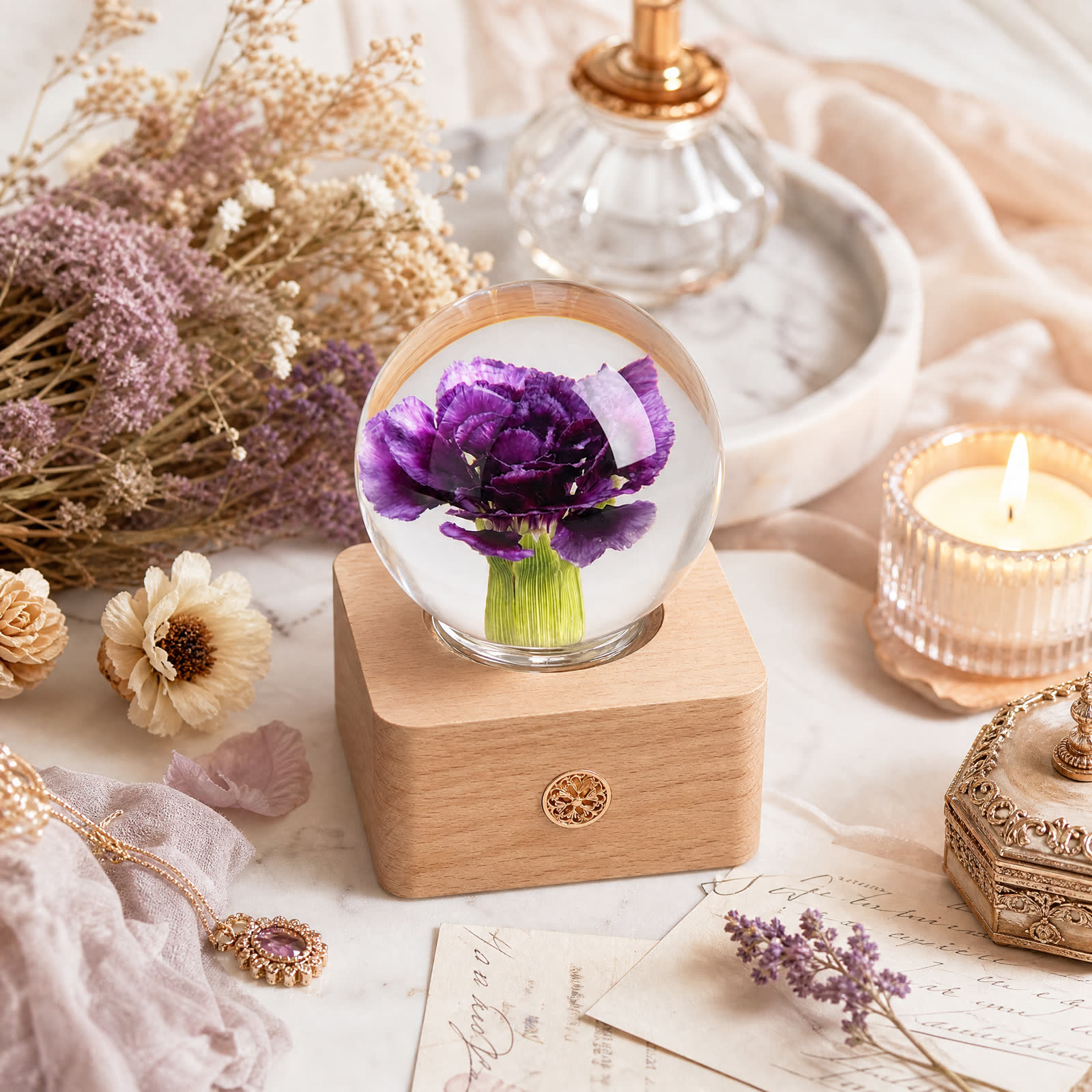
If you are looking at a flower and cannot tell which process was used, the tell is the texture. A dried flower crunches slightly and looks faded. A preserved flower feels much like a living one, and the colour is still full.
Do preserved flowers need water?
No. Not ever, and not a little. This is the single most common way people accidentally ruin a preserved flower.
There is no living stem drawing water upward any more, and no roots, so watering achieves nothing except adding moisture to a flower that has been deliberately made moisture-free. Water sitting in the petals or in the base invites mould, and once mould takes hold on a preserved flower it cannot be cleaned off without damaging the petals.
The same applies to misting. People spray preserved flowers thinking it keeps them fresh, and it does the opposite — the fine droplets sit in the petal layers and never dry out.
Are preserved flowers real?
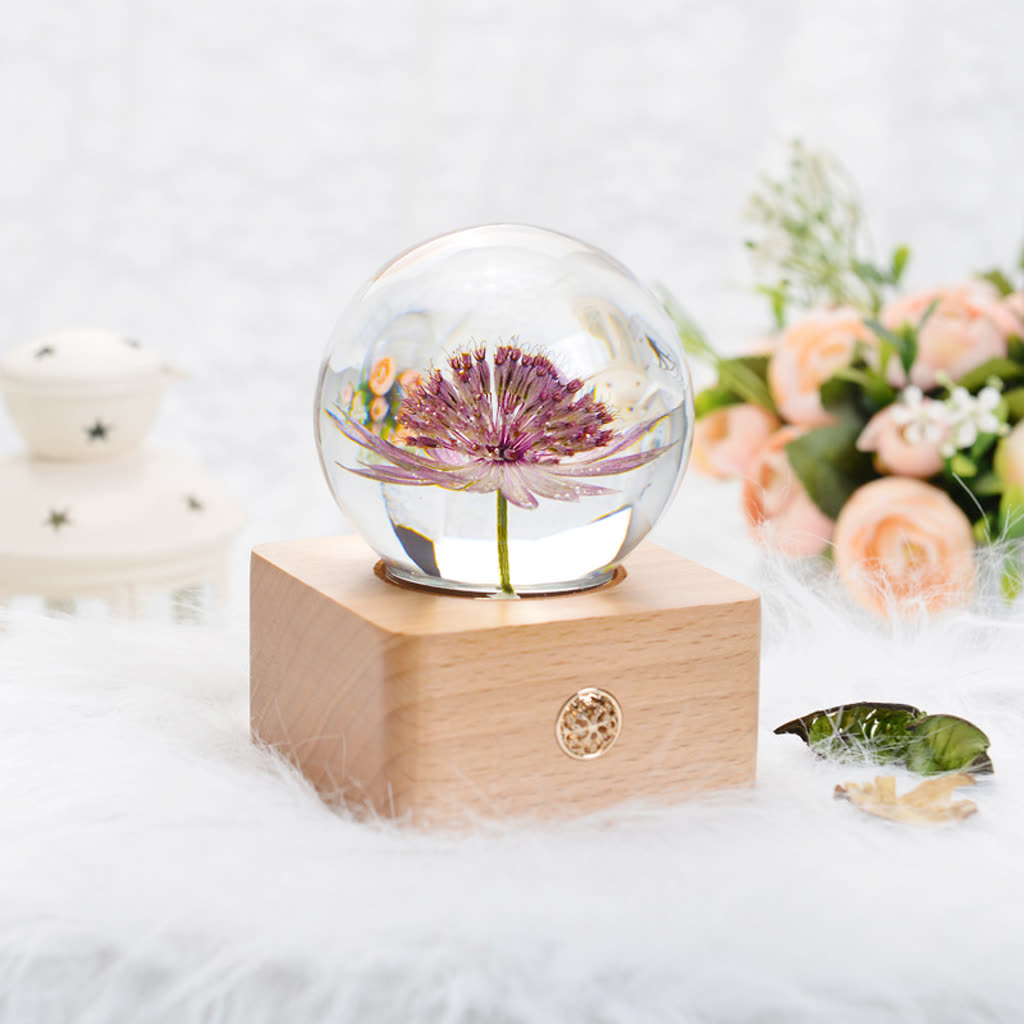
Yes — a preserved flower is a real flower. It starts as a bloom grown on a plant, and it is cut and treated rather than manufactured.
What has changed is that it is no longer alive. Preserving stops the flower at the point it was picked, which is exactly why it stays looking the same. A real preserved flower is not a replica, and it is also not a flower that is somehow still growing.
Plastic and moulded flowers are sold with similar names, which is where the confusion comes from. The reliable test is variation: real flowers are never perfectly identical to one another, so if a seller’s product photos show the same bloom with the same petal angles every time, you are probably looking at a mould.
How preserved flowers are made
The process is straightforward, and knowing it makes the care instructions make sense.
- The flower is cut at its peak. Not before it opens and not after — the bloom is taken at the point where it looks the way it should look forever.
- The water inside is replaced. The flower is placed in a solution of glycerine and related preserving agents. Over days or weeks, that solution is drawn through the stem and takes the place of the water in every cell. The petal keeps its structure, its softness, and most of its colour.
- Colour may be adjusted. Some flowers hold their original colour through preservation on their own. Others are tinted at this stage to keep a colour that would otherwise soften.
- It is dried gently and finished. The treated flower is air-dried in a controlled way and then arranged into its final piece — a box, a dome, or a resin sphere.
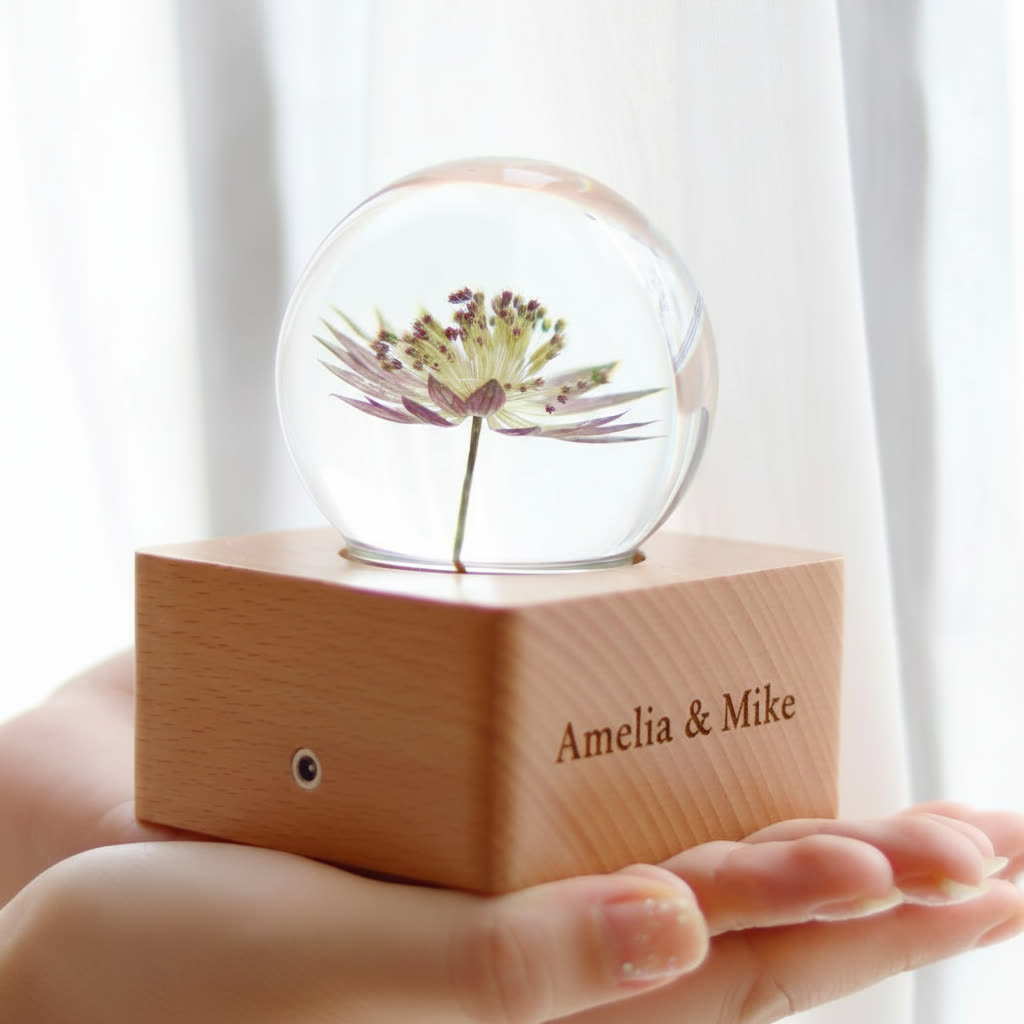
How to care for preserved flowers
Do
- Keep them out of direct sunlight — indirect daylight is fine and even helps them look their best.
- Keep them in a room with normal, stable humidity rather than a bathroom or a kitchen.
- Dust gently with a soft, dry brush or a cool hairdryer on its lowest setting, held well away.
- Keep the arrangement in its box or dome when you are moving it.
Don’t
- Do not water them or mist them, at any point.
- Do not handle the petals. The natural oils on your fingers mark preserved petals and the marks do not come out.
- Do not put them near a radiator, a fireplace, or in a hot car.
- Do not press or stack anything against them — preserved petals hold their shape but they do not spring back.

What shortens a preserved flower’s life
| Factor | What it does | What to do instead |
|---|---|---|
| Direct sunlight | Bleaches the petals and, over time, warms the tint of resin | Indirect daylight; never a sunny windowsill |
| High humidity | Invites mould, which cannot be removed without harming the petals | A normal living room rather than a bathroom or kitchen |
| Water or mist | Traps moisture in the petals and causes mould | Nothing. Never water a preserved flower |
| Heat | Dries and distorts petals | Keep away from radiators and direct heat |
| Handling petals | Leaves oil marks that cannot be cleaned off | Hold the base, not the flower |
How long do dried flowers last in resin?
Longer than they last anywhere else. An air-dried flower on a shelf is good for a few months before it starts to shed and fade. Once it is fully dried and completely sealed inside cured resin, it is cut off from the air and the humidity that would break it down, so it holds its appearance for years.
Two conditions have to be met first, and both matter. The flower must be fully dry or preserved before casting — any remaining moisture clouds the resin or turns the petals brown once it is sealed in. And it must be completely encased, because any petal left exposed to the air will carry on breaking down at the normal rate.
Where a preserved flower lamp fits in
A lamp is the version of this format with the least to go wrong. The flower is preserved, then cast inside a clear resin sphere and left to cure, so the petals are protected on every side. There is no arrangement to keep tidy, no dome to lift, and no box to open and close.
Practical care comes down to one sentence: soft dry cloth on the outside, and keep it out of direct sun. Nitela lamps are photographed in daylight so the colour of the flower and the clarity of the cast are both visible before you buy.
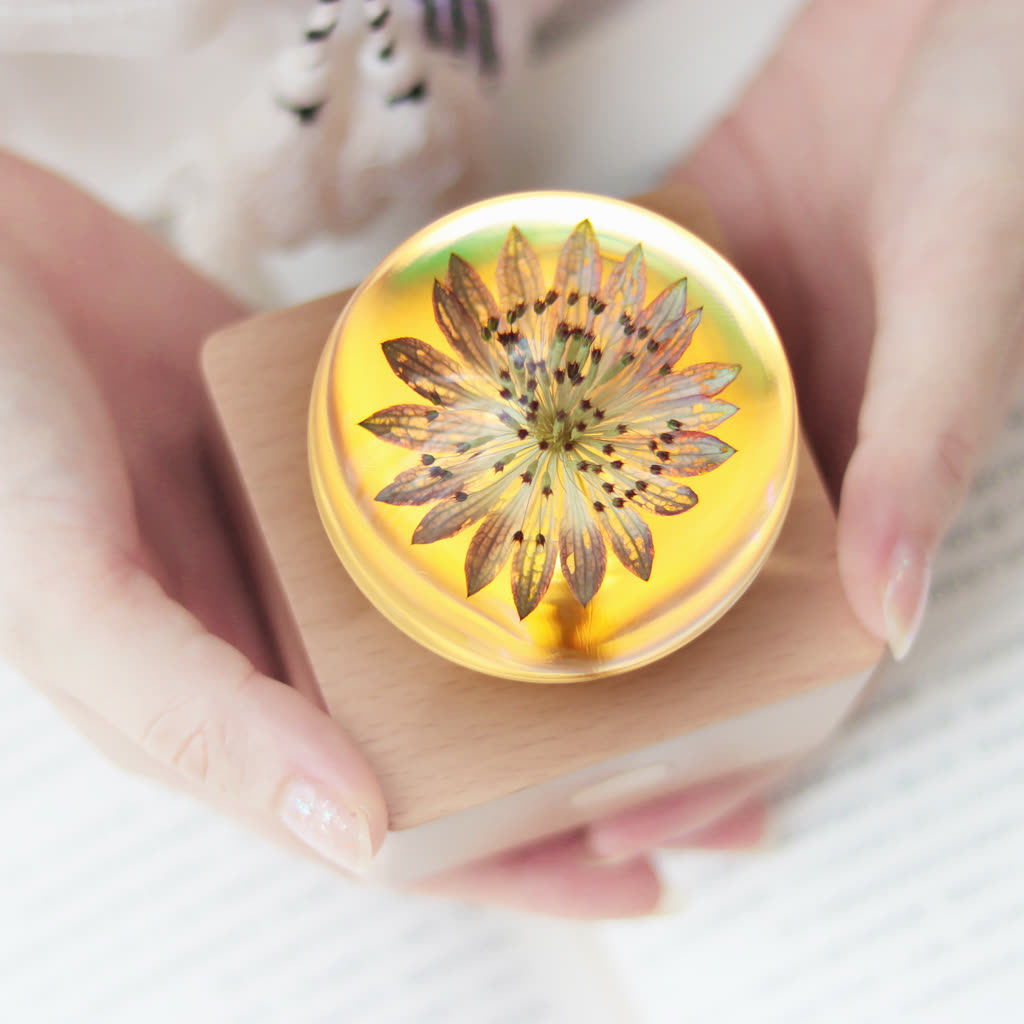
Astrantia · from $59.90
Astrantia Lamp
Fine star-shaped petals held in clear resin, with the flower’s structure clearly visible.

Red Hydrangea · from $59.90
Red Hydrangea Lamp
A dense cluster of small petals, which fills the sphere differently from a single large bloom.
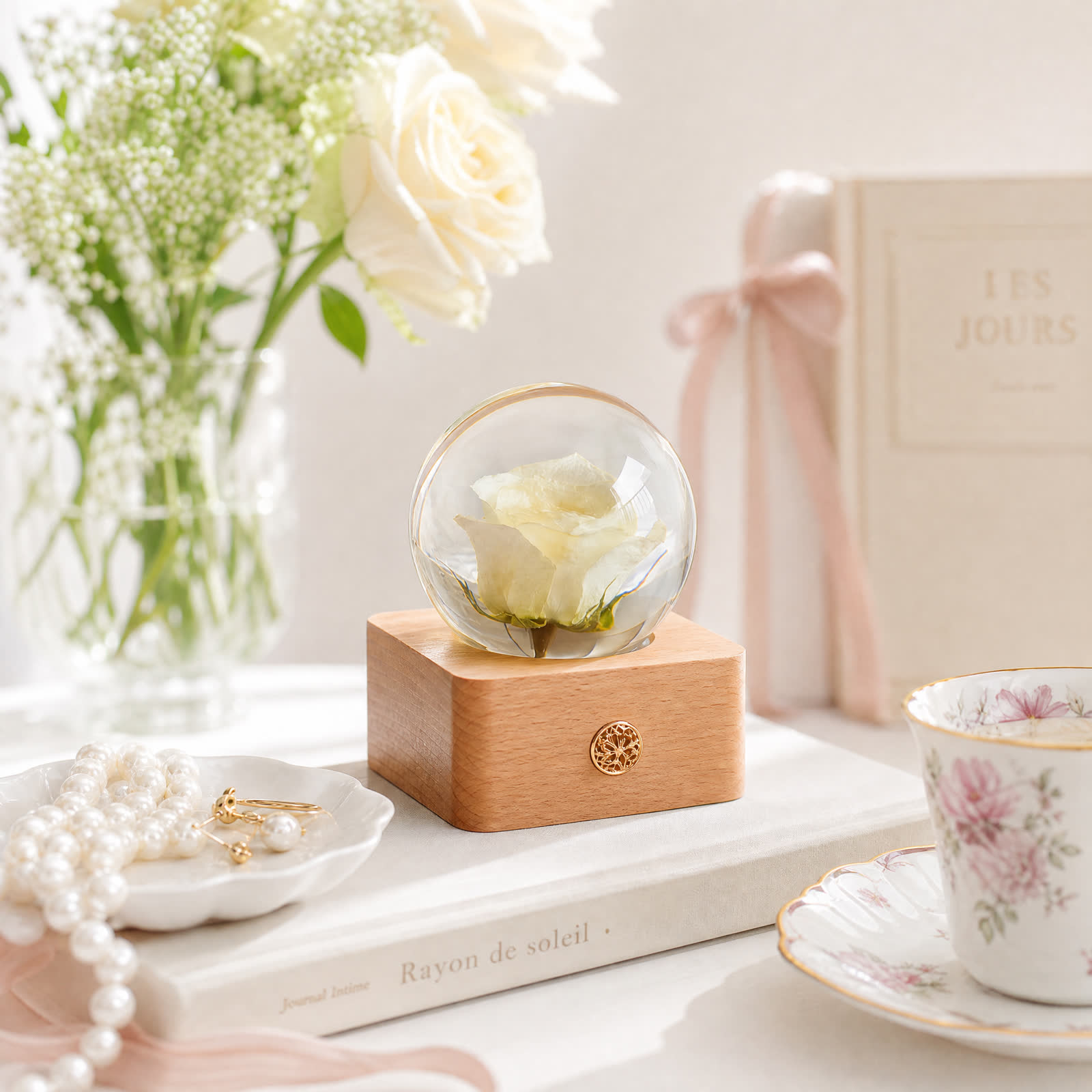
White Rose · from $59.90
White Rose Lamp
A single preserved rose in white, which keeps its shape well and suits a calm room.
More questions about preserved flowers
Do preserved flowers last forever?
No. The name is a promise about the feeling, not a claim about the material. Treated and kept out of direct sunlight, a preserved flower usually holds its appearance for one to three years and often longer. Sealed inside resin, it lasts for many years. It will not outlive the building, and a seller who says it will is overstating it.
How long do preserved roses last?
Broadly the same as any other preserved flower — one to three years in the open, longer under a dome, and many years sealed in resin. The rose’s larger petals are actually a small advantage: they hold their shape better than fine petals and show less damage from everyday dust.
Do you need to put preserved flowers in water?
No, and you should not. There is no living stem to draw water up, so adding it achieves nothing except putting moisture into a flower that was deliberately made moisture-free. Water and mist are the fastest way to bring on mould, and mould on preserved petals cannot be removed without damaging them.
How do you tell if preserved flowers are real?
Look for variation. Real preserved flowers differ slightly from one another, even within the same design — a petal sits a little differently, the spacing is not perfectly even, the centre is irregular. Identical blooms across a seller’s whole range usually mean a mould. Photos taken in daylight are the most reliable thing to judge from.
How long can store-bought flowers last without water?
A fresh bouquet taken out of water will usually look acceptable for a few hours and starts to wilt within a day, depending on the flower and the room. That is the gap preserved flowers exist to close: they are made to be kept without water from the moment they arrive.
Can preserved flowers get mould?
Yes, if they are kept somewhere damp. This is the single most common way a preserved flower is ruined. A bathroom, a kitchen windowsill, or a humid basement will do it. A normal living room with stable humidity is fine — preserved flowers need the opposite of what fresh flowers need.
Does a preserved flower lamp need any maintenance?
No. Wipe the outside of the resin sphere with a soft dry cloth if it picks up dust, and keep it out of direct sunlight. You never water it, never trim it, and never replace the flower. The only part that could ever need attention is the LED in the base.
Still glowing years from now
A real preserved flower, sealed in clear resin on a beech wood base. No water, no trimming, no upkeep — just a warm light and a flower that stays as it was.